For restaurant owners, bar operators, hospitality groups, retail brands, architects, designers, contractors, and distributors, custom furniture is not a decorative afterthought. The bar counter, hostess stand, banquette, retail display fixture, coffee kiosk, service cabinet, and millwork package all influence revenue, labor efficiency, guest comfort, compliance, and maintenance cost.
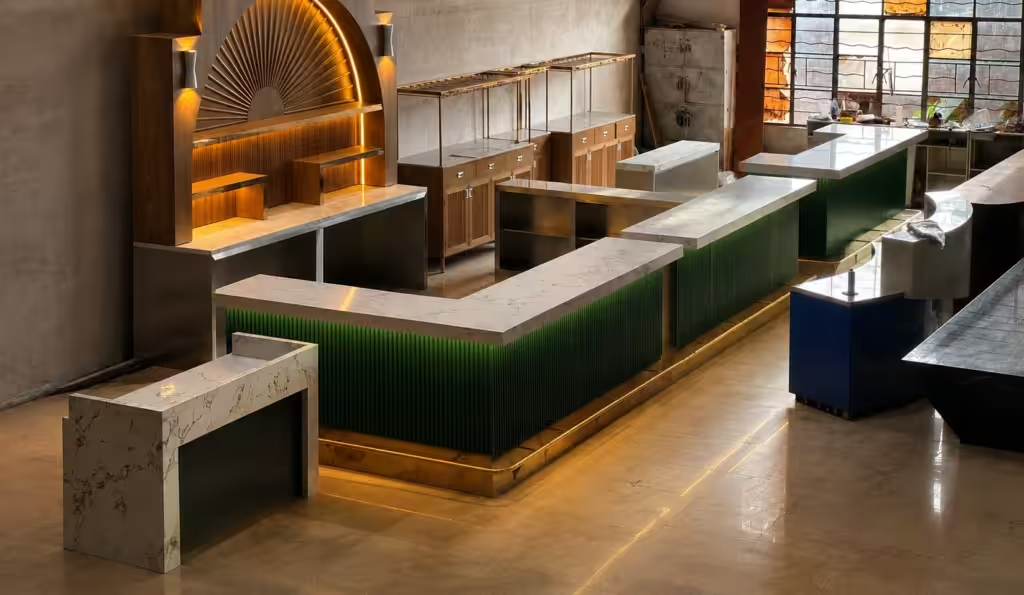
The costly mistake is treating commercial furniture like a catalog purchase. A bar can photograph well on opening night and still fail under service: moisture reaches an unsealed substrate, POS wiring is trapped behind fixed panels, staff lose seconds on every drink, or the accessible counter is added late and looks compromised.


Quick Answer
Custom commercial furniture should be specified around operations first, then aesthetics. The best projects define traffic flow, accessibility, equipment clearances, materials, shop drawings, site conditions, freight, and installation responsibilities before fabrication begins. Early manufacturer involvement reduces rework, protects opening dates, and improves lifecycle value.
Key Problems Buyers Face
1. Build-outs are being squeezed by time and cost pressure
Restaurant and retail projects often start with a strong concept and a compressed schedule. Lease commencement, landlord delivery, inspection, licensing, GC milestones, and staff training all converge. Furniture and millwork sit at the center because they touch flooring, plumbing, electrical, POS, refrigeration, and branding. Late decisions create rush charges, limited materials, higher freight, and missed windows.
2. Aesthetic renderings do not equal buildable specifications
Renderings rarely show scribe panels, access panels, cleat locations, toe kicks, stone seams, substrate thickness, edge banding, or load ratings. Without shop drawings, the team may not discover conflicts until the fixture is already on site.
3. Commercial use destroys weak materials
A restaurant chair can be moved dozens of times per day. A bar front is kicked, mopped, splashed, and leaned on for years. Retail fixtures are bumped by carts and cleaning machines. Coffee kiosks deal with heat, water, sugar, milk residue, and constant electrical loads. Residential-grade materials may not survive the first busy season.
4. Code and inspection details get added too late
In U.S. projects, ADA guidance for sales and service counters includes accessible counter portions with height and approach requirements. Food-service areas may also need to align with local cleanability rules. Canada has provincial and municipal accessibility rules — verify local requirements early.
Section Summary: Most cost overruns begin before fabrication, during unclear scope and late coordination. Commercial furniture must be engineered for moisture, impact, cleaning, traffic, and maintenance. Accessibility, equipment, and cleanability details belong in the first serious drawing set.
Conclusion
Custom bar counters, restaurant furniture, retail display fixtures, coffee kiosks, and commercial millwork should make a business easier to operate, easier to maintain, and more memorable. The right manufacturer does more than build what is drawn — it helps identify risks, improve workflow, select materials, coordinate details, and prevent expensive surprises.
If you are planning a restaurant, bar, cafe, hotel, retail store, kiosk, or multi-location program, start with drawings, photos, dimensions, equipment lists, and your opening date. A qualified manufacturer can turn those inputs into scope, budget, and a buildable plan.